
How Arrest Warrants Work in Hennepin County
A Hennepin County arrest warrant is a judge's order letting officers take one named person into custody. In Minnesota it usually begins with a complaint. The prosecutor files the charge. The judge then reviews the supporting documents and chooses how the person comes to court. A summons is the ordinary choice. It sets a court date and avoids taking anyone into custody. A warrant enters only when the rule's circumstances apply, such as a real risk the person will not appear. That call belongs to the judge in Hennepin County, and the case file records which way it went.
Hennepin County Arrest Warrants Under Rule 3
Everything starts with probable cause. A Hennepin County judge reviews the complaint under Rule 3 of the Minnesota Rules of Criminal Procedure. Then the judge decides how the person comes in.
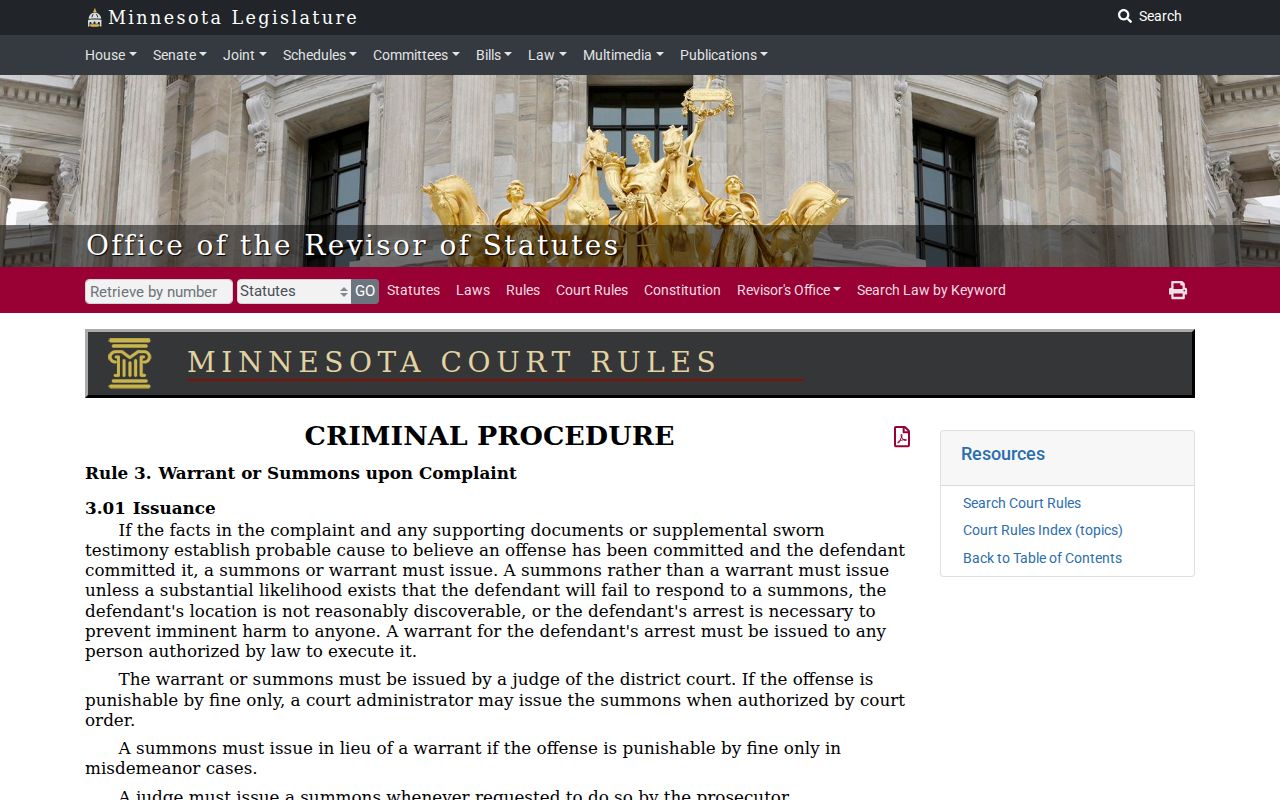
The rule text spells out the difference between a summons and a warrant, and the file number it produces is what the Hennepin County court and the Sheriff's Warrant Office work from. A separate rule picks up after an arrest. Rule 4 says an arrested person goes before a judge without unnecessary delay. That is why a custody event usually leads to a court appearance instead of a long hold without one.
Arrest Warrants: What They Contain
A Hennepin County warrant file is brief. It names the person. It also lists the offense, the issuing court, and the file number that ties everything else together.
| Court File Number | The Fourth Judicial District number for the case, in the 27-CR pattern that marks Hennepin |
|---|---|
| Person Named | The defendant named in the complaint, with identifiers the court has on file |
| Charge or Offense | The offense charged in the complaint or returned in an indictment |
| Issuing Judge and Court | The judge who reviewed the documents and the Hennepin division that holds the case |
| Bail or Bond Amount | Set by the court and confirmed with the Sheriff's Warrant Office once the number is known |
| Service Information | Whether the warrant has been served, recalled, or returned, as the court maintains it |
Hennepin Warrant Notice Under Minnesota Law
Minnesota law builds a notice rule into every warrant service in Hennepin County. The officer must announce the warrant. Showing it on request is required too. One Minnesota officer may also act on another's notice rather than holding the document itself.
Key Point: Minn. Stat. § 629.32 covers officer notice and the show-on-request rule; it does not make a warrant public before it is served.
Why Hennepin Cannot Display Every Arrest Warrant
Plenty of people assume an open warrant should show up somewhere online. Minnesota closes that door. Minn. Stat. § 13.82 sorts law enforcement data into classes, and warrant indices can stay confidential until the defendant is in custody, has been served, or has appeared in court. Investigative data stays protected while a case remains open. Arrest data are public, with limits. So a blank search result in Hennepin County proves nothing about warrant status, which is why the phone call matters.
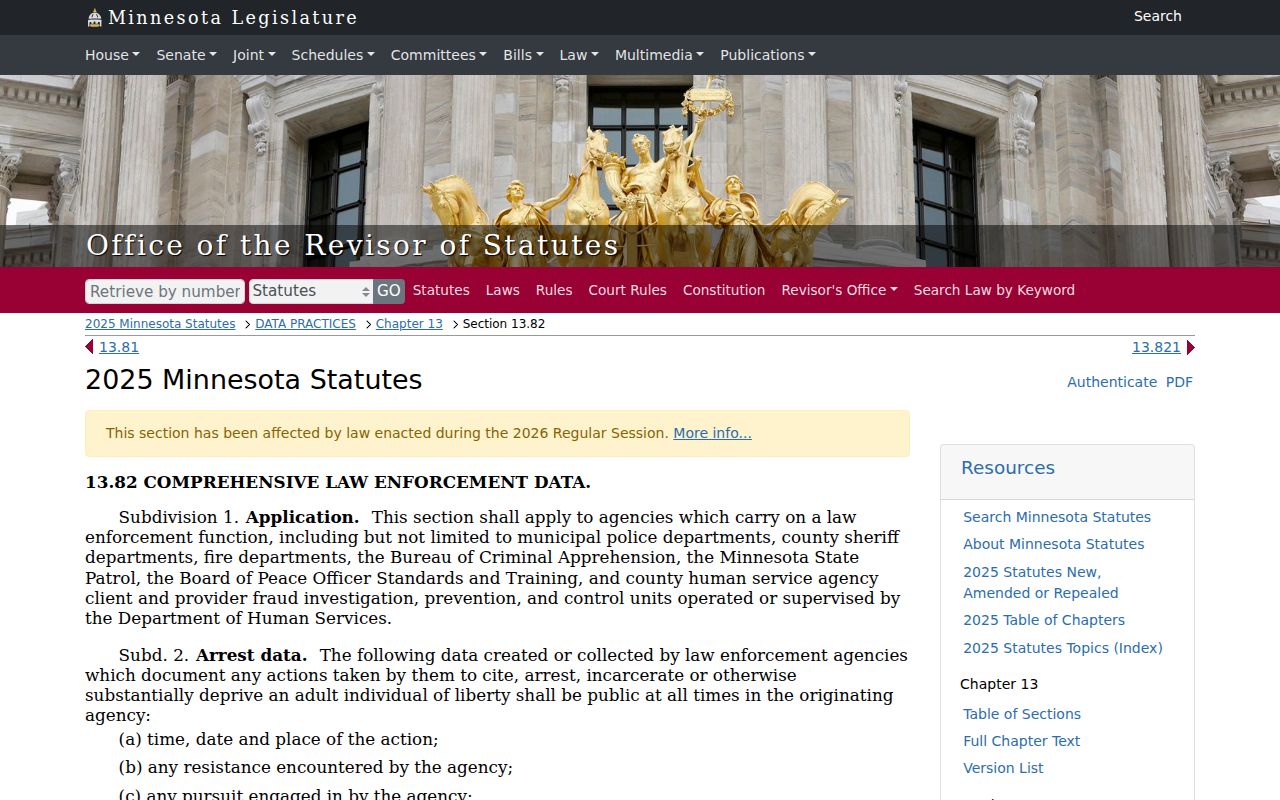
The statute explains why results run short. A Hennepin County warrant search that returns nothing does not mean no warrant exists.
Note: Treat every public result as partial, because a warrant index can stay confidential until service, custody, or an appearance.
How Warrants Get Served in Hennepin County
After a judge signs, the Hennepin County Sheriff's Office carries the warrant out. Court and Field Services houses a Civil Unit that serves writs and warrants. Its Extradition Unit moves people between jurisdictions. City police departments handle service inside their own cities too. Service is usually quiet. The warrant goes into the law enforcement network and surfaces at the next contact. That might be a traffic stop, a court date on another matter, or a planned arrest. The warrant stays real either way.
How Minneapolis Police Confirm Hennepin Warrants
The Minneapolis police warrant policy directs officers to confirm a Minnesota warrant through the state criminal justice network before acting. An out-of-state warrant number takes a different route. The policy sends that to Hennepin Jail instead of treating it as locally confirmable. The confirmation step protects the person named. An officer who cannot confirm does not act. Before calling about any Hennepin County warrant, ask which agency holds it.
Arrest Warrants, Summonses, and Bench Warrants
Three court processes reach the same Hennepin County courthouse by different doors. Telling them apart decides who answers the phone.
| Process | What It Does | What Comes Next |
|---|---|---|
| Summons | Orders an appearance on a set date without custody | A missed date can turn into a bench warrant |
| Arrest warrant | Authorizes an officer to take the person into custody | A court appearance, with bail or bond decided by a judge |
| Bench warrant | Brings a person back into a case already under way | A hearing, a Helpline call, or a turn-in, depending on the case |
What Hennepin Court Terminals Add
MCRO, the Minnesota Court Records Online search, is the main public window on case records. It has limits. The state describes the results as uncertified, and a name search can miss a pending criminal case without a conviction. Case numbers work better than names. Some records are not online at all. Public search-warrant files sit outside MCRO. A Hennepin County courthouse terminal or the state law library is the way in, and Rule of Public Access 8 covers inspection during working hours and limits remote access to personal identifiers and addresses.
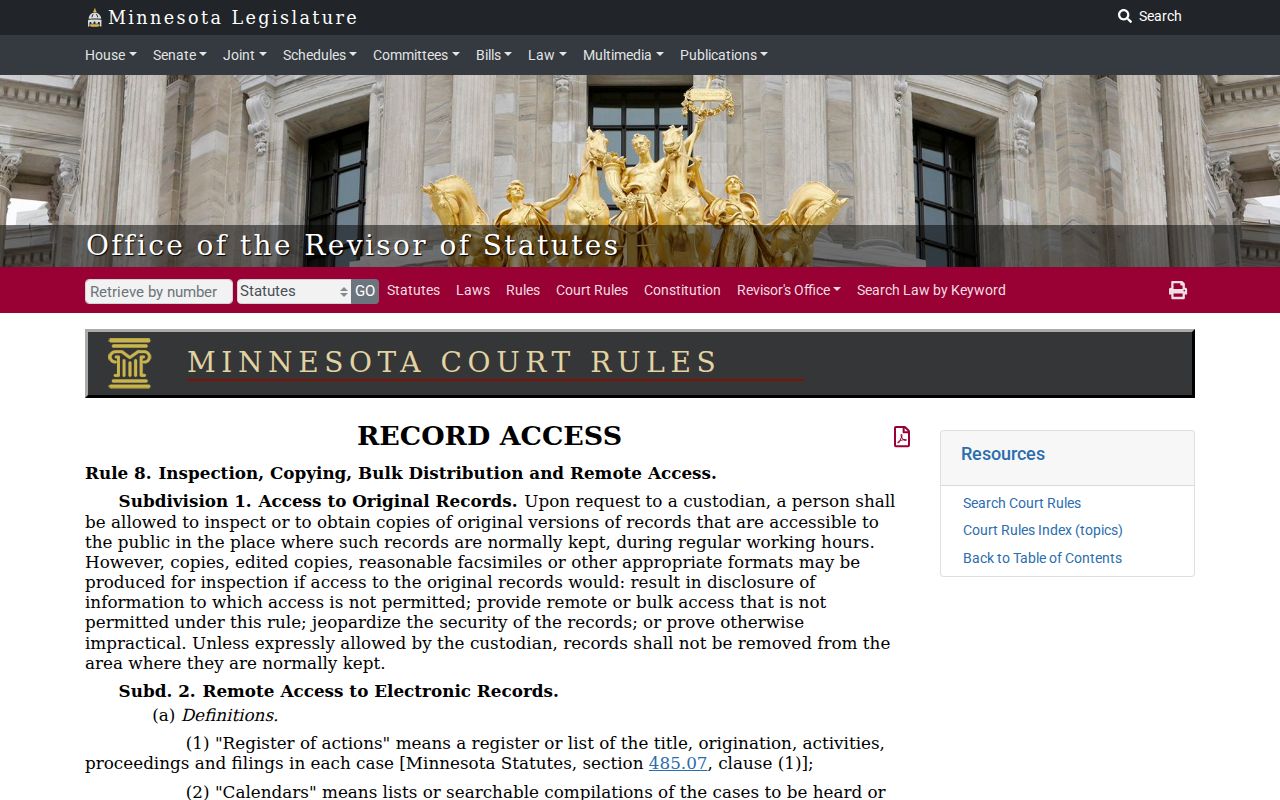
Sealing and confidentiality rules still bind a terminal visit. The Hennepin Records Center can explain what it copies for Hennepin County cases.
Hennepin County Extradition and Federal Warrants
Hennepin County operates an Extradition Unit that moves people held on active warrants to and from other jurisdictions. It is an operational team. It offers no public nationwide warrant lookup. A county warrant stays a county matter even when the person turns up somewhere far away. Federal warrants sit outside the county system altogether. A federal judge issues them, and the U.S. Marshals Service executes them. The District of Minnesota office and the North Star Fugitive Task Force handle that work, and the Sheriff's Warrant Office cannot confirm a federal process.
Handling an Arrest Warrant in Your Name
In Hennepin County, an arrest warrant is a court problem. Three paths exist. You can turn yourself in voluntarily, post the bail or bond the judge set, or ask the court to recall or quash the warrant. That last option is legal work, so it belongs with a licensed Minnesota attorney who can read the file.
- Get the case number from the court at 612-348-6000 using the full legal name and date of birth.
- Call the Sheriff's Warrant Office at 612-348-2000 for the status, the bail amount, and the turn-in instructions.
- Talk to an attorney before you surrender, and ask what the appearance will look like.
- Keep every document from the appearance and confirm afterward that the warrant is no longer open.
Important: Do not try to outrun an arrest warrant; an attorney and a planned turn-in protect your court position far better than a surprise stop.