
How Traffic Warrants Work in Hennepin County
A traffic warrant is a court warrant, born from a traffic case in Hennepin County. It starts as a plain ticket. Then it becomes a case in Hennepin District Court or a matter at the Violations Bureau, and if a required appearance is missed or a fine sits unpaid long enough, a judge can issue process to bring the person back. Because the warrant is part of a court file, the court and the Sheriff's Warrant Office are the only offices that can confirm it. A driving record plays no part here. Hennepin County treats a traffic warrant as a court matter first, so nothing in a driving-history or insurance product will settle the question.
Hennepin Violations Bureau and Traffic Warrants
The Hennepin Violations Bureau page covers parking, traffic, criminal, municipal-ordinance, boating, and DNR citations. The downtown office sits on the Skyway Level of the Government Center, past screening. It also describes hearing-officer equipment at the downtown and suburban spots.
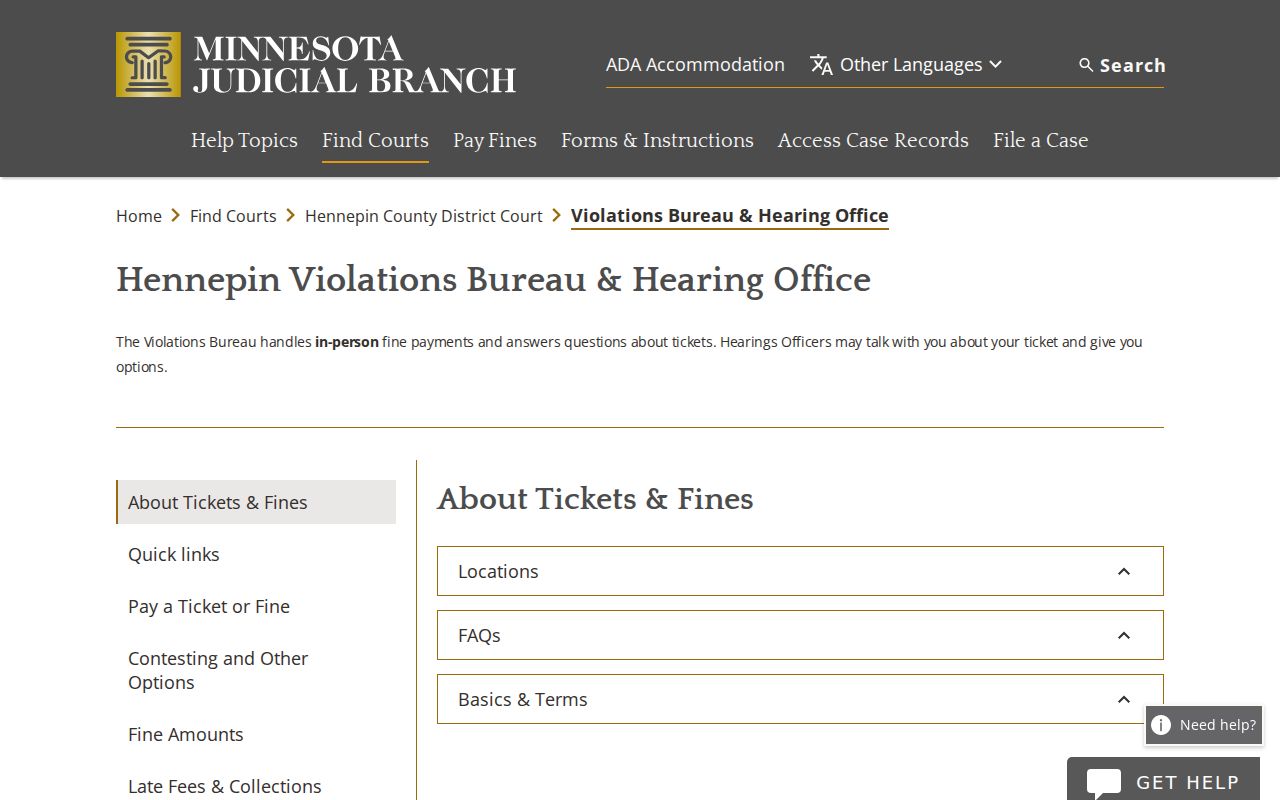
That official page walks through payment, hearings, and what happens after a failure to appear, which makes it a better first stop than a payment kiosk. Payment runs through the state court payment center at 651-281-3219 in the metro area and 1-800-657-3611 outside it. Mail goes to the Minnesota Court Payment Center in Willmar. No cash travels by mail.
Hennepin County Traffic Warrant Checks
Checking on a Hennepin County traffic warrant works like any other warrant check in the county. The citation number simply does the work a case number does elsewhere.
- Read the citation or notice for the case number and the courtroom, then call the court at 612-348-6000 if you have neither.
- Search MCRO by citation number or case number and read the hearings and register of actions for a missed date.
- Call the Warrant Helpline at 612-540-6485 on a weekday and ask whether a warrant is open.
- Call the Sheriff's Warrant Office at 612-348-2000 for the bail amount and the turn-in instructions once a warrant is confirmed.
From a Citation to a Hennepin Warrant
The path from ticket to warrant is short, and it rarely announces itself. A citation sets a deadline or a court date. Miss it, and fees stack up. A failure-to-appear finding may follow, and from there a bench warrant can issue. Minnesota Rule 6 governs citations, including the failure-to-appear warning printed right on the paperwork. Once the warrant exists, the case moves to a different set of consequences, including the chance of arrest on a future stop. No new charge is needed. The original ticket is still the case being handled.
Why Payment Does Not Clear Hennepin Warrants
A payment settles money, nothing more. A warrant is a court status, not a balance. Someone can pay a fine in full and still have an open bench warrant from the missed appearance that produced it. So call the court first. Ask what the payment covers and what remains. If a warrant is open, ask whether the matter can be scheduled, then confirm the warrant status after the appearance. Keep the receipt and any confirmation number.
Note: Ask the court to confirm the warrant status after payment rather than assuming a cleared balance clears the warrant.
Traffic Warrants: What They Show
A Hennepin County traffic warrant record carries the same core fields as any other court process here. The citation number sits alongside the file number. Traffic file numbers follow the county pattern, so a Hennepin case charged as a criminal matter looks like 27-CR-24-1. A petty case carries a citation number instead.
| Citation Number | The number printed on the ticket, which the payment center and the court both accept |
|---|---|
| Court File Number | The Fourth Judicial District file number when the citation becomes a case |
| Charge or Offense | The traffic or parking offense named on the citation |
| Hearing or Due Date | The date the case required, and the date that was missed if a warrant followed |
| Fine, Fees, and Bail | Amounts set by the court, including any added fee after a failure to appear |
| Status | Open, paid, scheduled, or with a warrant, as the court maintains it |
Hennepin County Traffic Warrant Locations
Traffic and criminal calendars sit in three buildings, and the citation decides which one. Division 1 is downtown at the Government Center, where the Violations Bureau also sits. Division 2 is at the Brookdale Regional Service Center in Brooklyn Center for the northern cities. Division 3 is at the Ridgedale Regional Service Center in Minnetonka for the western ones. If a notice names a different courtroom, that notice controls. The suburban division map also shifts with caseload. The court's suburban court page is the best check before a trip.
Clearing a Hennepin County Traffic Warrant
Clearing a Hennepin County traffic warrant means getting in front of the court that issued it. Pay what the court requires and confirm the status. Or appear on a scheduled date. An attorney can also move to recall or quash the warrant.
Caution: A bench warrant from a missed traffic date stays active until the appearance, and the court warns that arrest is still possible in the meantime.
Ask the Hennepin County court which step applies before sending money. Then confirm the warrant is closed once that step is finished.
Missing a Hennepin County Traffic Court Date
A missed date is the most common way a Hennepin County ticket becomes a warrant. Start with a phone call, not a payment. The court has to tell you whether a warrant exists and what it takes to clear it.
- Find the citation number and the courtroom on the notice.
- Call the court at 612-348-6000 or the Warrant Helpline at 612-540-6485 and ask for the current status.
- Ask whether the matter can be placed back on the calendar, and note the date and time in writing.
- Confirm the warrant status after the appearance instead of assuming the calendar entry cleared it.
City Citations and Hennepin County Warrants
Not every Hennepin County ticket goes to court. Some cities issue administrative citations that run through a city hearing instead. Brooklyn Park, for example, gives a fourteen-day window to appeal to a hearing officer who is not a city employee. That hearing is not a criminal warrant hearing, and it decides no court case. The paperwork tells you which track you are on. A notice naming Hennepin District Court follows the court route, while one naming a city administrative process carries that deadline. Reading it carefully prevents a missed deadline on the wrong track.
Five Citations and Hennepin County Impoundment
Hennepin County's Violations Bureau puts a hard number on the risk: five or more unpaid traffic or parking citations can cost you your vehicle through impoundment. That warning comes bundled with the court's other consequences for unpaid tickets. Added fees and penalties pile up. Unpaid balances go to collections. Your license can take a hit, and a warrant remains a real possibility. The bureau page posts the surcharge amounts for state and local fees plus a parking surcharge, but fee schedules shift, so confirm the current figure with the court before paying. One more distinction matters for Hennepin County drivers: an impoundment warning is not a warrant, and setting up a payment plan does not by itself close a warrant.
How Traffic Warrants Trigger License Holds
Minnesota keeps the court case and the license consequence on separate tracks, and they rarely move at the same pace. A Hennepin County court can issue a warrant for a missed appearance. The state then handles any suspension through its own process.
| Piece | Who Handles It | What It Means for the Reader |
|---|---|---|
| Court case and warrant | Hennepin District Court and the Sheriff's Warrant Office | Confirm status and clear the warrant through the court |
| Failure-to-appear notice | Minnesota Driver and Vehicle Services under Minn. Stat. § 171.16 | A missed court date can reach the license independently of the warrant |
| Suspension authority | Minnesota Driver and Vehicle Services under Minn. Stat. § 171.18 | Ask the court and the state what steps restore driving privileges |
Note: Clearing the warrant and restoring a license are two steps, so finish both instead of stopping at the first confirmation.